 Prompt Cartography
I am stoked to announce a new addition to the Prompt Cartography ecosystem: map design schemas.
These are reusable, editable, AI-assistant-ready style systems for making maps. In plain English, they help your mapmaking agents understand what kind of map you want before they start flinging colors, labels, legends, and interface widgets around in every possible direction.
You can browse the initial batch of roughly 25 schemas here: promptcartography.com/design-schemas/.
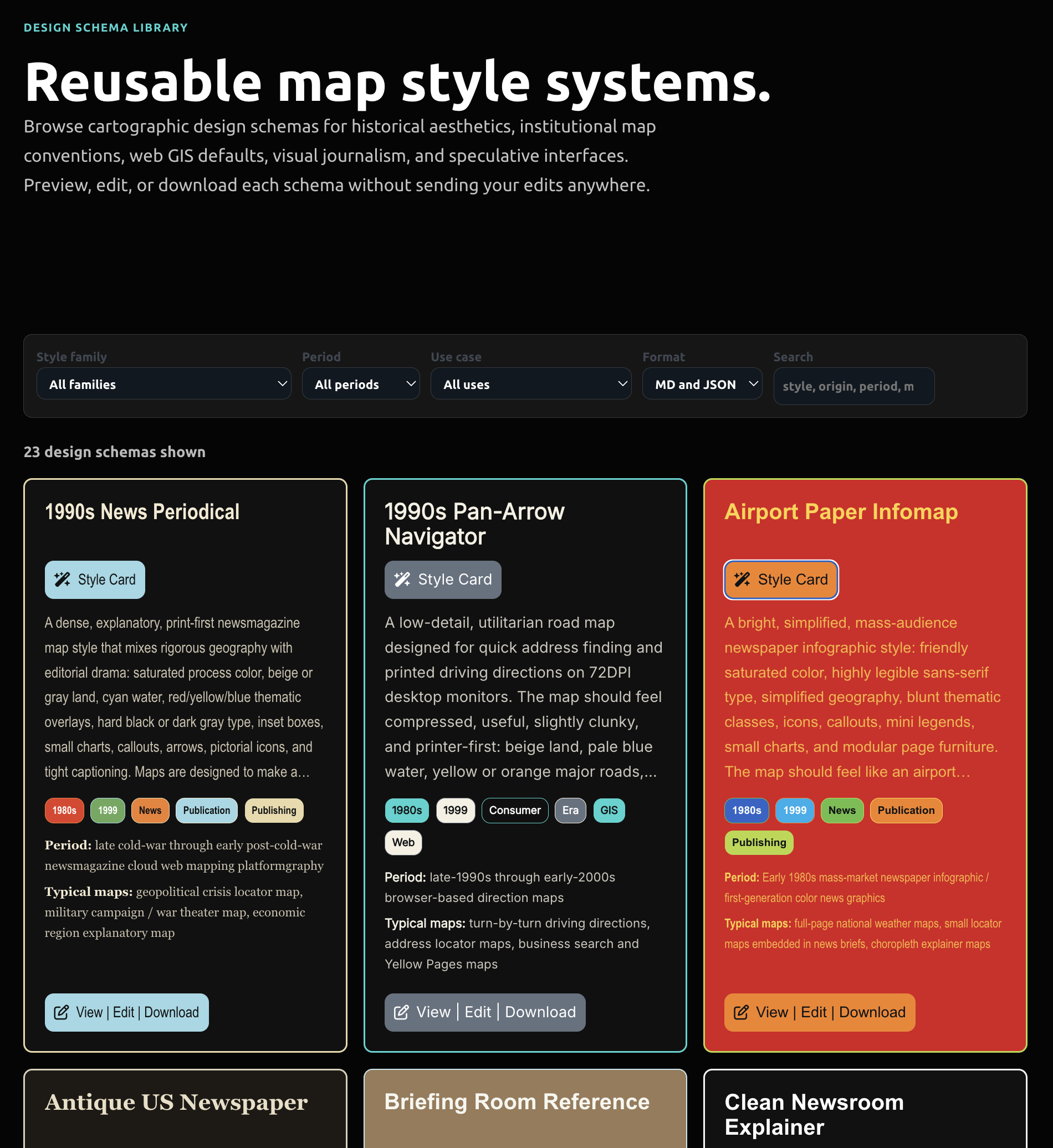
These schemas are designed to help prompt cartographers create maps that feel connected to recognizable cartographic traditions, historical periods, publishing genres, institutional conventions, early GIS software aesthetics, visual journalism, speculative interfaces, and other useful mapmaking directions.
Importantly, these are not copies of specific maps. They are interpretive design systems inspired by broader cartographic conventions, historical examples, open visual research, and stylistic patterns. The goal is not to reproduce someone else's famous map. The goal is to give you and your AI assistants a coherent starting point for making original maps with stronger design direction right away.
That distinction matters. A schema is not a counterfeit map costume. It is a style brief. It helps your agents understand the visual world you want them to work inside.
This is where things get useful fast.
Instead of asking an assistant to "make a professional map," which is about as effective as telling one of my kids to "go do some chores," you can give it a schema that explains the desired palette, typography, layout logic, symbol behavior, map furniture, texture, interaction patterns, and overall design posture.
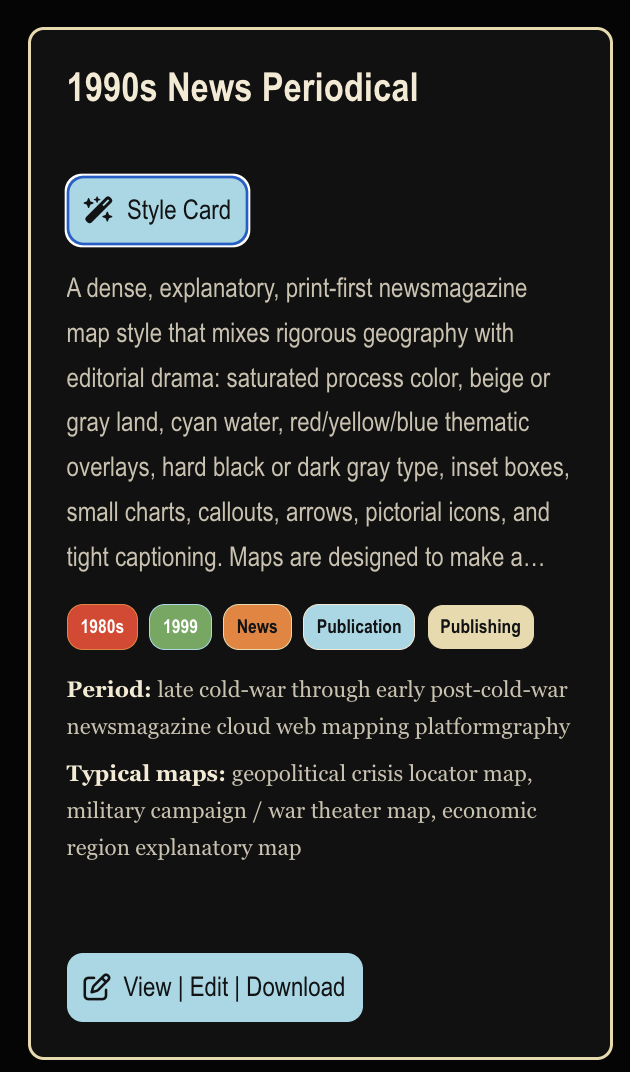
Want something inspired by Swiss topographic precision? There is a schema for that. Want an early 1980s news magazine feel with bold editorial hierarchy and possibly too much confidence? Covered. Want early web mapping awkwardness, ArcView 3.x blunt-force desktop GIS charm, CIA World Factbook restraint, Sanborn-style urban detail, cyberpunk surveillance interfaces, or historical atlas energy? The library is starting to get delightfully strange already.
And this is only the beginning. Many more schemas are coming. My rough plan is to build around 100 of them, because apparently I looked at my life and thought, "What this needs is another elaborate cartographic side project." Reasonable.
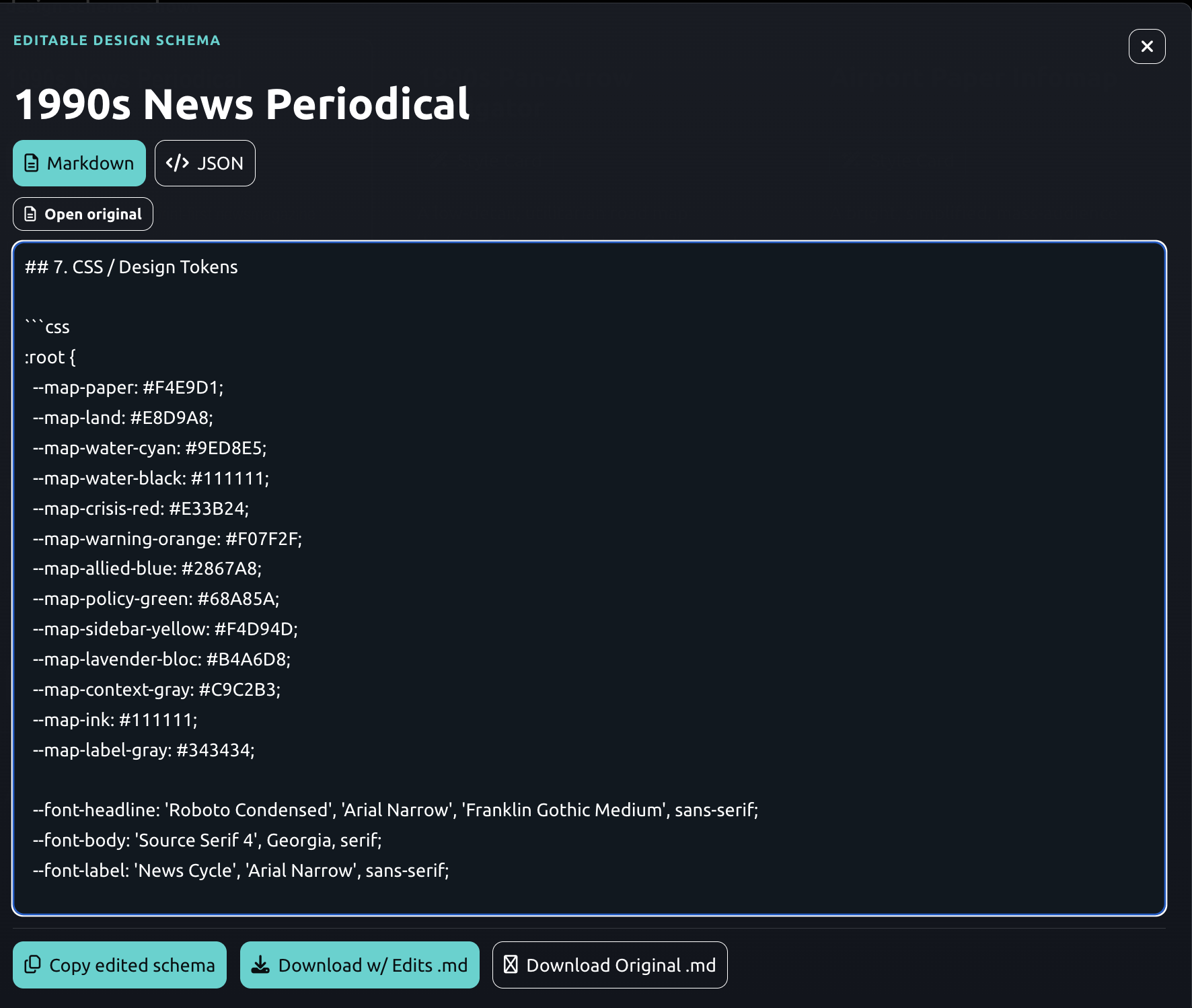
The best part is that these schemas are not just static examples. You can edit them directly on the website.
Open a schema. Switch between Markdown and JSON. Adjust the color palette. Tweak the type recommendations. Rewrite the design language. Add your own constraints. Remove anything that does not fit your project. Then copy or download the edited version and feed it into WebMapGPT, MapDoctor, your own custom assistant, or whatever prompt-cartography contraption you are currently building in the garage.
No account required. No mysterious upload ritual. I designed it so you can edit the schemas locally in your browser before downloading the Markdown file or JSON. Use the result however you like.
That is important because the schema library is not meant to be a gallery. It is meant to be a working set of reusable design artifacts. These schemas are props, set pieces, stage directions, and house rules for directing maps.
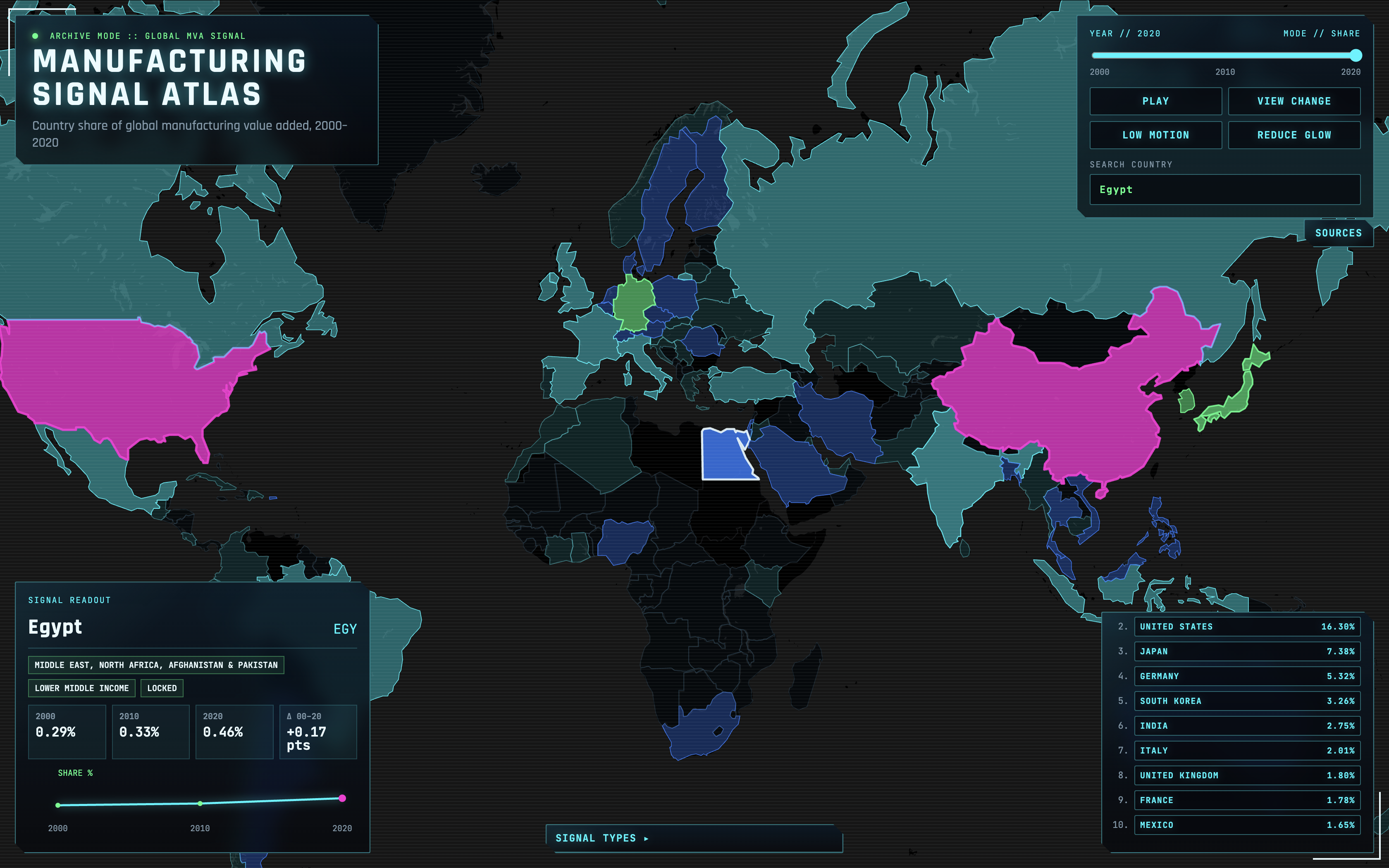
This is also where the Prompt Director idea really starts to click.
A good schema gives your team of agents something concrete to work from. It tells them what kind of visual world they are entering. It prevents every map from drifting back toward the same default gray basemap, generic sans-serif labels, and "good enough" legend styling. It helps your agents stay aligned with your vision while still leaving room for iteration and surprise.
That is the magic trick: once the schema exists, your assistant has a style brief. Your team of agents, and the map they are helping you build, immediately inherit a design perspective.
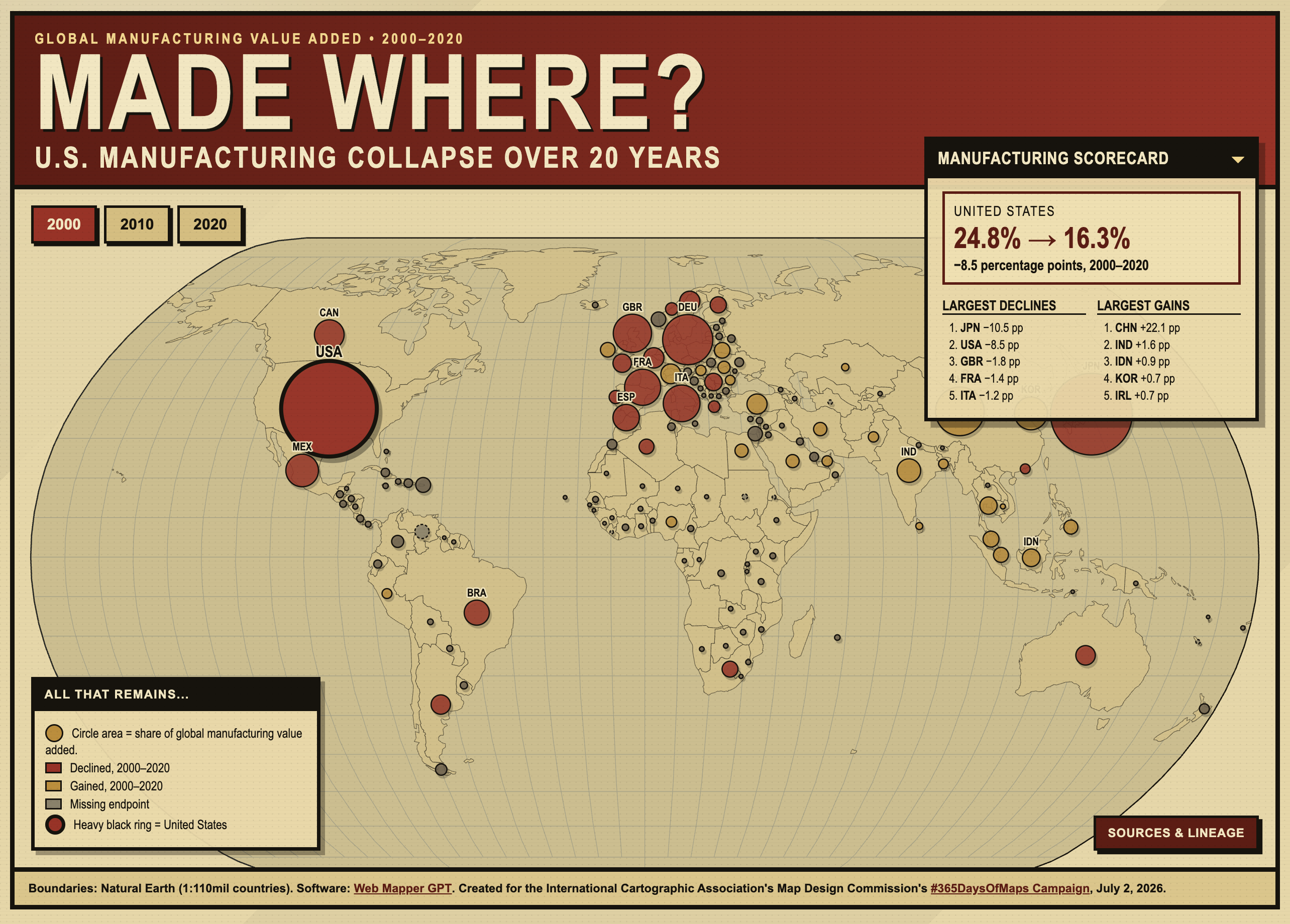
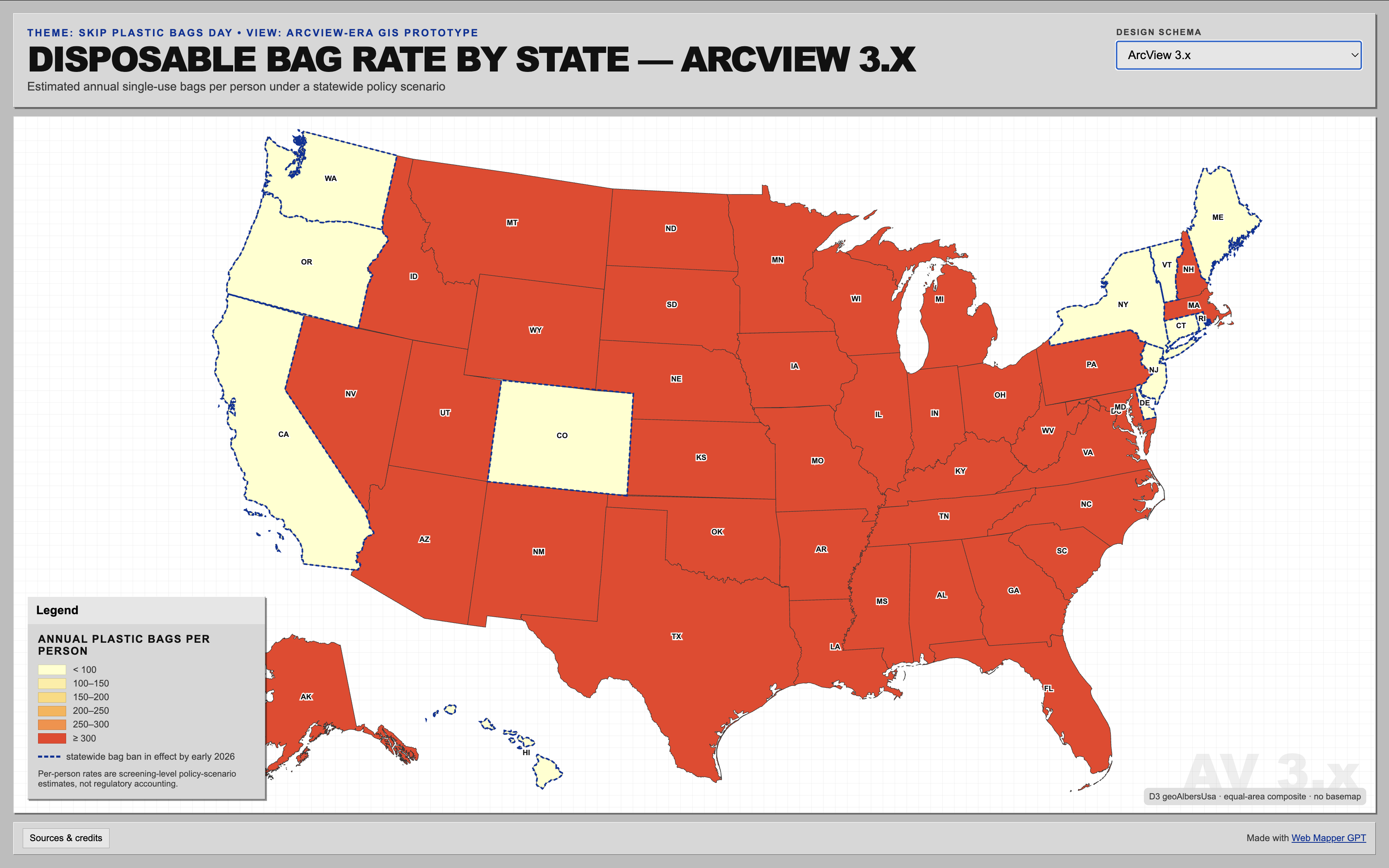
These schemas do not replace cartographic judgment. Absolutely not. They make judgment more explicit.
They turn map-design knowledge into something inspectable, editable, teachable, remixable, and reusable. They help you make stronger aesthetic decisions earlier in the workflow. They help you communicate your intent to a whole team of assistants. They help you iterate from a meaningful first draft instead of wrestling with the perfect font for three hours before realizing the legend itself still stinks.
Will these schemas make every map perfect? No way. Let us not get delusions of grandeur here. But they will save time, reduce ambiguity, improve stylistic consistency, and give you a stronger foundation from which to critique and refine throughout the workflow.
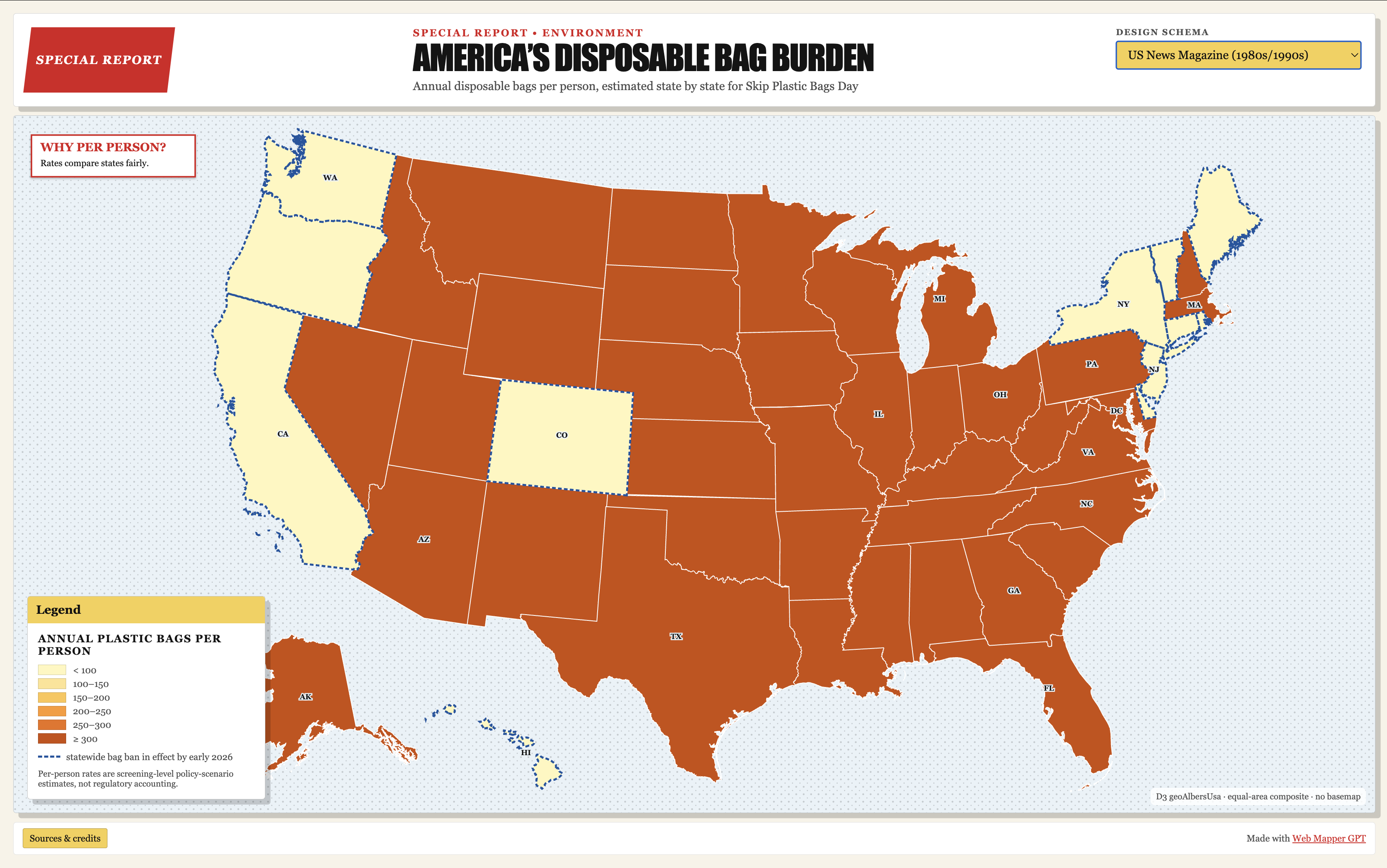
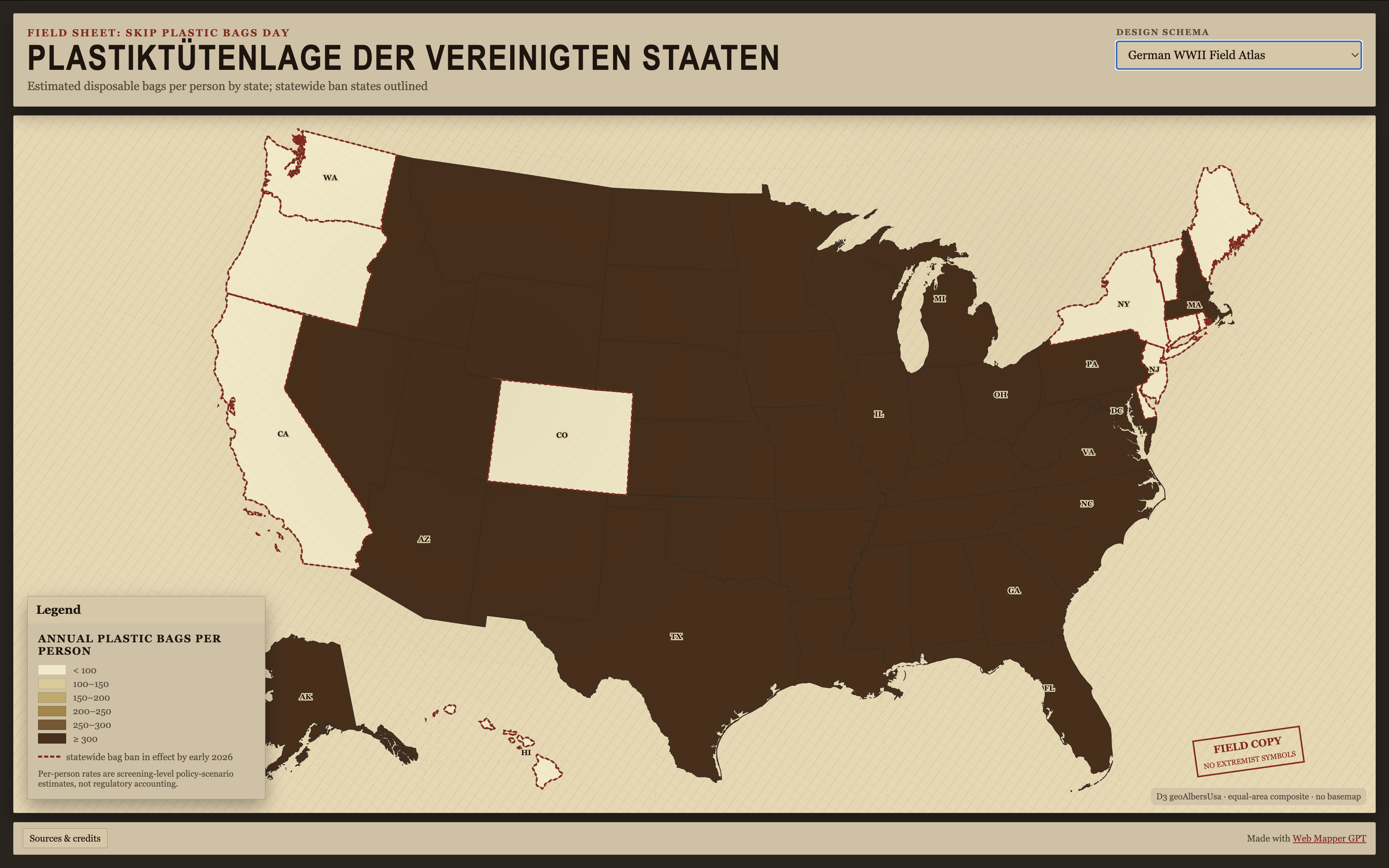
The schemas are also intentionally reusable. They are available under a Creative Commons attribution license with attribution to PromptCartography.com. Use them in teaching. Modify them. Remix them. Extend them. Break them apart. Build better ones. Cartography advances through experimentation. Mutate and evolve them, please.
Why PromptCartography.com and Not WebMapGPT.com?
Good question.
PromptCartography.com is my educational hub: the resource library, teaching space, prompt-writing home base, and the place where I post things related to prompt cartography and learning broadly.
WebMapGPT.com is the garage I am sitting in right now. It is where I tinker with ideas, tools, gamification, prototypes, and my daily maps. It is a digital version of my mental experimental build space, which is kind of meta-mental when you think about it. WebMapGPT means a lot to me and remains the place where many of my experimental tools first come to life.
Together, the two sites are meant to help more people design better maps through natural language. That is my goal with both sites. There is no going back. The future of map design has been prompted. Sorry, I could not help myself.
So please, go explore the design schema library. Grab one. Edit it. Download it. Feed it to your favorite mapmaking LLM assistant. Make something strange, elegant, rigorous, alarming, funny, explanatory, beautiful, or historically resonant. Or do not.
Have fun with them. More are coming.
Happy mapping; happy map directing.